L’Oréal broke two of three climate promises. The fine: €3 million. Its profit: €6 billion
In 2022 the world’s biggest beauty company made three climate promises, with a fine if it broke them. It broke two. It paid the fine, about €3 million, and almost nobody noticed.
“Reduction of Scopes 1, 2 and 3 GHG emissions on a “cradle-to-shelf” scope by 14% per sold product”
Promised 14% less CO2 per product. Delivered 5%. The fine was about €3 million, for a company that made about €6 billion in profit.
€3m finepaid for missing two of three climate promises. L’Oréal’s profit in 2025: about €6 billion
- Gathering
- Building
- Breaking
The promise in five steps · E · environment and climate
- 1The goalCut the carbon behind every product sold by 14%, run its own sites on renewable energy with almost no leaked gas, and make half its plastic packaging recycled or plant-based.
- 2The timeBy 31 December 2025, against 2021; written into a loan repaid in June 2026.
- 3The conditionsMost of the carbon sits with suppliers and transport firms it does not control, and the mix of products it sells shifts with fashion.
- 4The resultsPlastic packaging 50.14% (met). Sites 96% under the bond’s count (missed: leaking cooling gas at six sites broke the limit). Carbon per product −5%, or −10% on L’Oréal’s comparable count (missed).
- 5The explanationL’Oréal: a different product mix, and suppliers and transport firms cutting too slowly. My reading: its own factories moved fast, the value chain did not, and the fine was too small to force it.
How I read every sustainability report: goal, time, conditions, results, explanation.
Paris, 22 March 2022. L’Oréal, the biggest beauty company in the world, borrows three billion euros in one day. In part of that loan it writes something unusual: three promises to the planet, and a fine for itself if it breaks them.
This kind of loan is called a green bond. Simple version: if the company misses its own green goals, it must pay the lenders extra. It is like telling your friends you will quit sugar, and promising to pay them if you don’t.
I like this kind of promise. It has a number, a date and a price. Most climate promises only have a date, and it is usually far away.
Promise one: all L’Oréal’s own factories and offices stop making CO2 by the end of 2025. Promise two: half the plastic in its packaging is recycled or made from plants.
Promise three was the big one: 14% less CO2 for every product it sells, compared with 2021. That counts everything, from the farms that grow the ingredients to the trucks that bring your shampoo to the shop.
Why count all that? Because most of a beauty company’s CO2 is not in its own factories. It is in what it buys and what it moves.
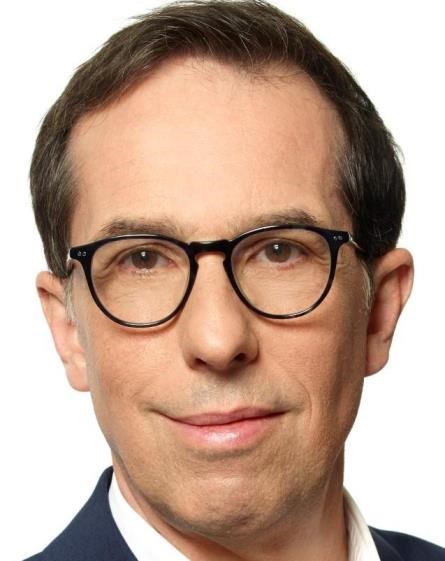
The boss was Nicolas Hieronimus, CEO since 2021. A promise made in his first year, with the company’s money on it, is exactly the kind I check.
Now jump to February 2026. Hieronimus presents the year: record results, and a profit of about six billion euros.
Five weeks later the annual report comes out, hundreds of pages long. The climate results are not on the front page.
Plastic: 50.14%. Goal met, by the smallest possible margin.
Factories: all now run on green power. That is real progress. But gas leaked from cooling machines at six sites, more than the loan allowed. So that promise counts as broken.
The big one: CO2 per product fell 5%, not 14%. Even on L’Oréal’s own, kinder count it fell 10%. Still short.
One pass, two fails. In my classroom, that means you take the exam again.
L’Oréal’s explanation: it sold a different mix of products than planned, and the companies that make and move its goods cut their CO2 too slowly. That is a real reason, and it deserves to be heard.
So the fine was due. In June 2026 L’Oréal paid its lenders extra: about €3 million.
That is a lot of money for you and me. But L’Oréal made about €6 billion in profit last year. The fine was about one two-thousandth of that. A company that size earns €3 million back before lunch.
And almost nobody noticed. As far as I can find, no big newspaper wrote about it. The notice sits on a page for lenders, and one small research group wrote about it for investors.
Now the interesting part. L’Oréal is not a villain in this story. It is two companies at once.
Company one is its own factories. Since 2019 their CO2 has fallen by more than half, five years ahead of its 2030 goal. That is a real achievement.
Company two is everything it buys and moves: ingredients, packaging, trucks, planes. That is where most of its CO2 is, and since 2019 it has gone up 5%.
The new promise for that part: 28% less by 2030. It started falling last year, but from the wrong side of the line.
Here is how I teach it. Give the CO2 from what L’Oréal buys a score of 100 in 2019. Today it is 105. The promise is 72.
That is why the green bond was a good idea, and why the fine was too small. A fine that small is not a punishment. It is a parking ticket.
I am not saying L’Oréal didn’t try. Its own numbers show it did, and its factories prove it can. I am saying the size of the fine told everyone how much the promise was worth.
What you now know
- A green promise is worth what it costs the company to break it. Find the fine before you trust the promise.
- Ask which CO2 is being cut. A company’s own factories are often the small part. What it buys and sells is usually most of it.
- Give the first year a score of 100. Then you see in one number if things are getting better or worse.
Next time a company shows you a green promise, skip the photos of forests. Find the sentence that says what happens if they miss. That sentence is the promise. The rest is advertising.
Diary date: in March 2027 L’Oréal’s next report shows if the CO2 from what it buys is finally falling fast enough. I will be reading the sentence nobody takes a photo of.
Law No. 32 · Make the Promise Cost More Than the Excuse
Understand Business. Better.
Max Noble
Before the newspapers
Get the next storm, and the next hidden hero, first.
One leader, one promise to the world, checked against the company’s own report, the morning it is published. With the five-step tool to read any sustainability report: useful for your next exam and your next board meeting. Free.
Thank you. The next storm reaches you before the newspapers.
The writer lectures in strategy, finance and innovation, spent more than a decade in internal controls around the world, and is the founder of Max Noble, which tracks the promises companies make and whether they keep them.
€1 = DKK 7.46 (Danmarks Nationalbank central rate): €3.1m is about DKK 23m. Max Noble holds no stake in any party named. Right of reply: L’Oréal had not been asked for comment before publication on 4 November 2026. Any response will be added here, with the date it arrived.
How this column was judged
- What was promised14% less CO2 for every product it sells, by 2025, or pay a fine (22 March 2022)
- Where it was saidloreal-finance.com
- What came outOnly 5% less CO2. Two of three promises broken. Fine: about €3 million (18 March 2026)
- Where it came outloreal-finance.com
- The verdictPartly kept · Law No. 32 · Make the Promise Cost More Than the Excuse
The numbers, exactly
- Bond: €1,250m, 4.25 years, 0.875% a year; part of a €3bn bond priced 22 March 2022 · source
- Carbon per product sold (Scopes 1–3, cradle to shelf) vs 2021: promised −14%; delivered −5% (L’Oréal also shows −10% on a comparable basis) · source
- Operated sites: promised 100% renewable energy with at most 130 tCO2e of leaked refrigerant gas; scored 96% under the bond’s count · source
- Plastic packaging recycled or bio-based: promised 50%; delivered 50.14% · source
- Premium: 0.250% of principal, about €3.1m (about DKK 23m), due 29 June 2026 · source
- 2025 net profit €6,127.2m, about €0.7m an hour: €3.1m is about 4.5 hours · source
- 2030 targets vs 2019: Scope 1 and 2 −57% (2025: −58%); Scope 3 −28% (2025: +5%); index 2019 = 100: Scope 3 at 105, target 72 · source
Sources
- L’Oréal news release, 22 March 2022: inaugural €3bn bond including a €1.25bn, 4.25-year, 0.875% sustainability-linked tranche, with the three targets
- L’Oréal 2025 annual results release, 12 February 2026: net profit €6,127.2m; Nicolas Hieronimus on record gross and operating margins
- L’Oréal 2025 Universal Registration Document, §4.16 p. 280: bond results and L’Oréal’s reasons (product mix; suppliers and logistics providers; refrigerant leaks at six sites above 130 tCO2e)
- L’Oréal 2025 Universal Registration Document, §4.19 p. 286: auditors’ limited assurance on the bond indicators (sites 96%; carbon per product −5%)
- L’Oréal SLB Trigger Event Notice, 28 May 2026: premium of 0.250% of principal on ISIN FR0014009EJ8, due 29 June 2026; not an event of default
- L’Oréal 2025 Universal Registration Document, p. 210: 2030 targets (Scope 1 and 2 −57%, Scope 3 −28%, both vs 2019) and 2025 results (−58% and +5%)
- L’Oréal 2024 Universal Registration Document, §4.16 p. 277: the bond’s objectives and 2024 progress
- Anthropocene Fixed Income Institute, “L’Oréal misses SLB targets”, 23 March 2026 (specialist analysis, used as a lead)
Readers’ page 47
Found a warning nobody read?
Every company prints its troubles somewhere. Usually on a page nobody reaches. Send me the page. If it says what you say it says, I will credit you by first name in a column.
Thank you. I will read it, which already puts me ahead of the board.